



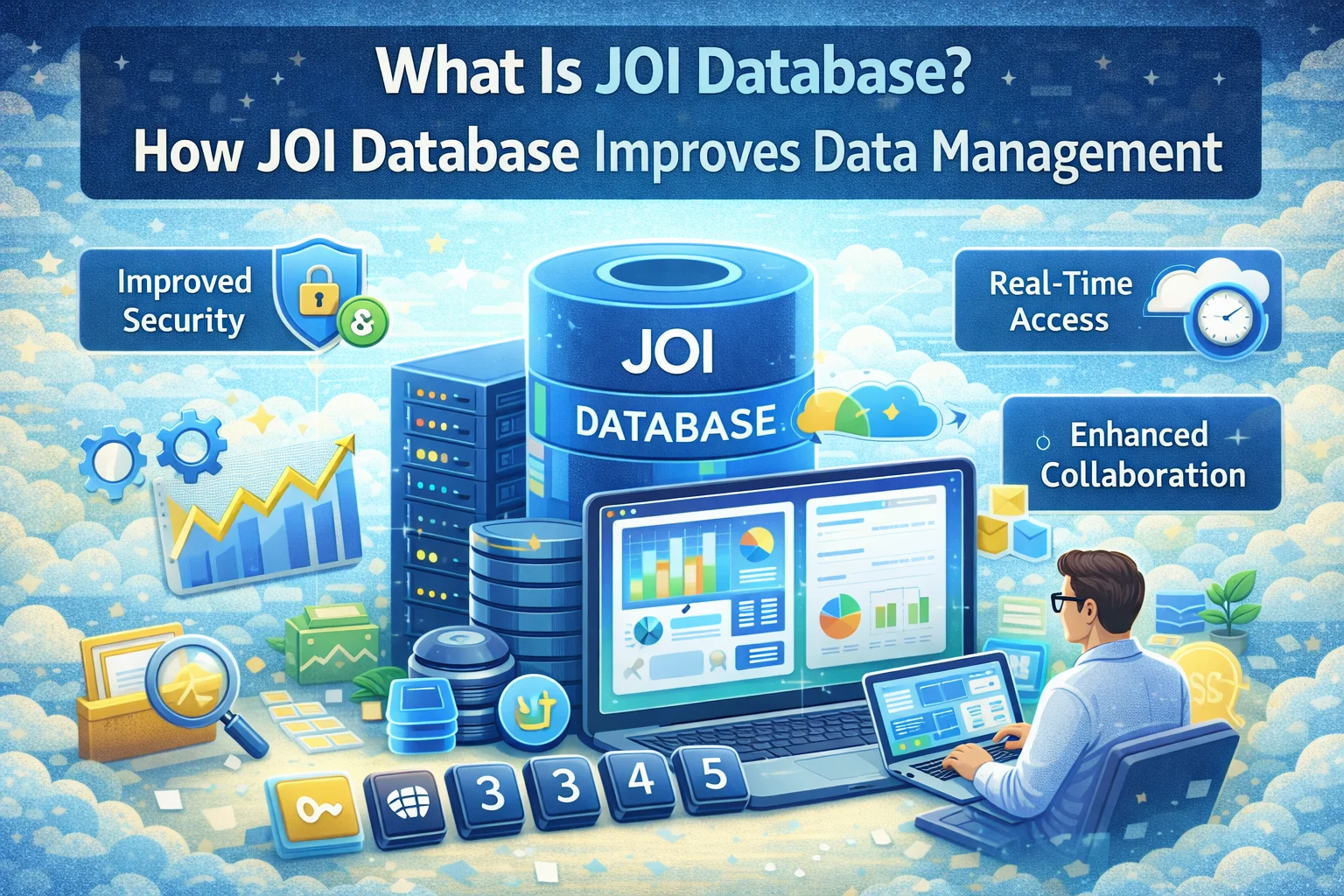
A JOI Database is a modern data management system designed to store, organize, and retrieve structured information efficiently. In today’s digital environment, businesses generate massive amounts of data daily, from customer records and transactions to analytics and internal documentation. Without a reliable database solution, managing this information becomes complex and error-prone. JOI Database software aims to simplify data handling by offering structured storage, optimized queries, and secure access controls.
Modern organizations require database systems that are scalable, secure, and capable of real-time performance. A JOI database platform is built to meet these needs by combining performance optimization with flexible deployment options. Whether used by small startups or large enterprises, JOI data management tools support streamlined workflows and better decision-making.
Key Features of JOI Database
One of the primary JOI database features is structured data organization. Data is arranged in tables, schemas, or categorized formats that make searching and retrieving information faster. This structured approach reduces confusion and ensures consistency across departments.
Real-time data access is another important feature. Teams can access updated records instantly, improving collaboration and productivity. Security and encryption tools are also central components of a JOI database system. These tools protect sensitive data through encryption protocols, secure login systems, and role-based permissions.
Scalability and flexibility make JOI database software suitable for growing organizations. As business needs expand, the system can handle increased data volumes without sacrificing performance. This adaptability ensures long-term usability and cost efficiency.
How JOI Database Improves Data Management
JOI Database improves data management efficiency by enabling faster data retrieval. Optimized indexing and query processing reduce wait times, allowing users to access information instantly. This is especially beneficial for businesses that rely on quick reporting and analytics.
Another advantage is reduced data redundancy. By centralizing information and maintaining structured records, JOI data management systems minimize duplicate entries and inconsistencies. This improves data accuracy and reliability.
Improved collaboration is also a major benefit. Multiple users can securely access and update information simultaneously, ensuring smooth teamwork across departments. Additionally, automated backups and recovery systems protect data from accidental loss, hardware failures, or cyber threats. These features enhance operational stability and business continuity.
JOI Database for Businesses and Developers
JOI Database is suitable for both businesses and developers. Small businesses can use it to manage customer data, inventory records, and financial transactions efficiently. Large enterprises benefit from its ability to handle complex datasets and integrate with advanced analytics tools.
Developers can integrate JOI Database with web applications, CRM systems, and enterprise software through APIs and connectors. This integration ensures seamless communication between platforms. Organizations can choose between cloud-based deployment or on-premise installation depending on their security requirements and infrastructure preferences. Cloud deployment offers scalability and remote access, while on-premise systems provide greater internal control.
Performance and Security Benefits
Data protection mechanisms are essential in any modern database management system. JOI Database includes encryption protocols, regular security updates, and secure authentication methods to safeguard information. Access control and permissions allow administrators to define user roles, limiting data exposure to authorized personnel only.
Optimized database queries enhance performance by reducing processing time. Efficient indexing and query planning ensure that even large datasets can be searched quickly. These performance improvements directly impact productivity and user satisfaction.
JOI Database vs Traditional Database Systems
Compared to traditional database systems, JOI Database offers improved scalability, enhanced security measures, and more flexible deployment options. Legacy systems often struggle with large-scale data handling and may lack modern encryption standards. JOI Database addresses these challenges with updated architecture and streamlined performance optimization.
Another key difference lies in automation. Modern database solutions like JOI Database often include automated maintenance tasks, backups, and performance monitoring, reducing manual workload and minimizing errors.
Best Practices for Using JOI Database
To maximize the benefits of JOI Database, businesses should organize structured data clearly and consistently. Implementing naming conventions and categorization standards improves usability. Regular backups and system updates are essential for maintaining security and reliability.
Monitoring database performance through analytics and system logs helps identify potential issues early. By following these best practices, organizations can ensure smooth data handling and long-term efficiency.
Conclusion: Is JOI Database the Right Choice?
JOI Database provides a modern and efficient solution for data management challenges. With features such as structured organization, real-time access, security controls, scalability, and performance optimization, it supports businesses in managing data effectively. Whether you are a developer building applications or a company handling large datasets, JOI Database offers practical tools to enhance productivity and data accuracy.
Choosing the right database solution depends on your organization’s size, security needs, and growth plans. However, for businesses seeking reliable modern database management with strong performance and security features, JOI Database is a strong and flexible option.
FAQs
1. What is JOI Database used for?
JOI Database is used for storing, organizing, and managing structured data efficiently in businesses and applications.
2. How does JOI Database improve data management efficiency?
It improves efficiency through faster data retrieval, reduced redundancy, automated backups, and optimized performance.
3. Is JOI Database suitable for small businesses?
Yes, JOI Database can be used by small businesses to manage customer data, transactions, and operational records securely.
4. Can JOI Database integrate with other software systems?
Yes, it supports integration with web applications, CRM platforms, and other enterprise systems through APIs and connectors.
5. What makes JOI Database different from traditional systems?
JOI Database offers better scalability, enhanced security features, automation, and improved performance compared to many legacy database systems.